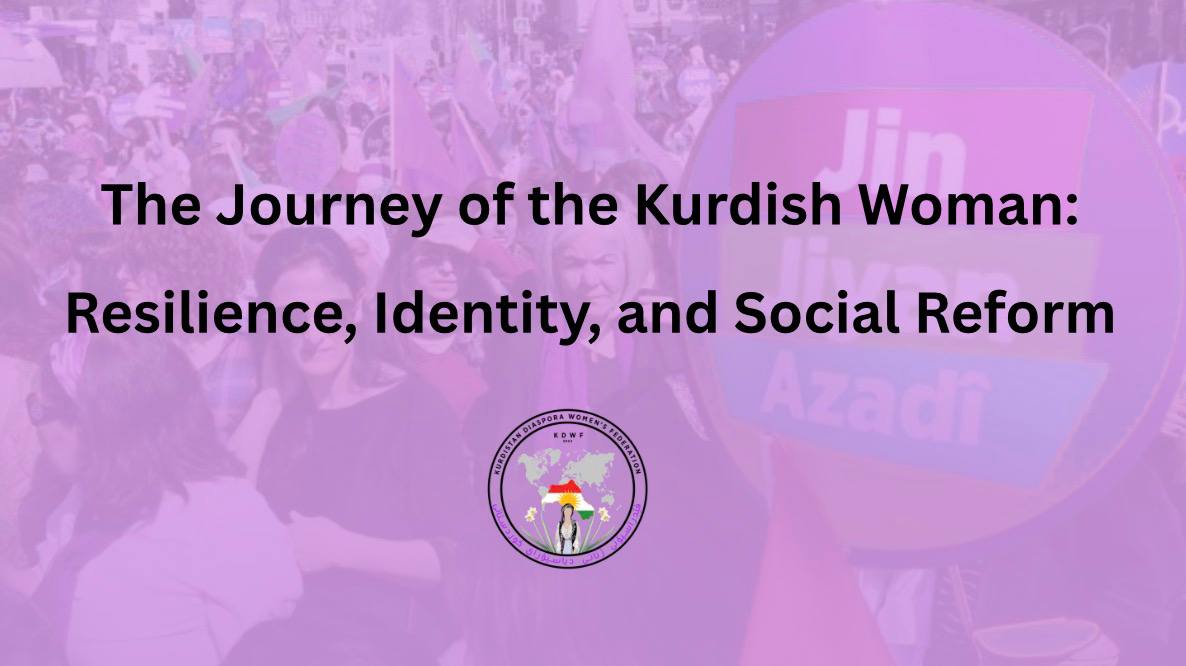
The Journey of the Kurdish Woman: Resilience, Identity, and Social Reform
1. Introduction: A Dual Struggle
The narrative of the Kurdish woman is defined by a "dual struggle": the fight for national identity as part of an oppressed ethnic group, and the fight for gender equality within a traditional patriarchal society. Unlike many of their peers in the Middle East, Kurdish women have historically stepped out of domestic roles to lead tribes, negotiate treaties, and participate in armed revolutions. Their journey is a complex tapestry of survival, intellectual growth, and political activism.
2. Historical Pioneers: Breaking the Tribal Mold
Long before the rise of modern feminist movements, individual Kurdish women rose to positions of immense power, challenging the notion that leadership was a male-only domain.
* Lady Adela (Adela Khanum): Known as the "Princess of the Brave," she ruled the Halabja region in the early 20th century. She was a sophisticated administrator who established a prison, a court of justice, and vibrant bazaars. Her leadership proved that Kurdish society, while tribal, could respect and flourish under female authority.
* Mastoura Ardalan: In the 19th century, at a time when education for women was scarce, she became a renowned historian and poet in the Ardalan principality (present-day Iranian Kurdistan). Her work remains a cornerstone of Kurdish literature.
3. The Era of Tragedy and Transformation (The 1980s)
In Southern Kurdistan (Iraq), the 1980s were a turning point.
The Ba'athist regime’s Anfal Campaign resulted in the disappearance and murder of over 182,000 Kurds, the vast majority of whom were men.
The Widow’s Burden: Tens of thousands of Kurdish women were left as the sole heads of households. They had to navigate extreme poverty, displacement, and the trauma of loss while raising the next generation. This period forced a socio-economic shift where women entered the workforce and public life out of necessity, forever changing the traditional family structure.
The Halabja Massacre: Women were the primary witnesses and victims of the chemical attacks in 1988. Their resilience in rebuilding their communities after such devastation is a testament to their central role in Kurdish survival.
## 4. Political Empowerment and Legal Reform
In the last three decades, Kurdish women have moved from being victims of conflict to becoming architects of policy.
The Kurdistan Regional Government (KRG) Experience
The establishment of the KRG in 1992 opened doors for institutional feminism.
* The 30% Quota: To ensure representation, the Kurdish Parliament implemented a quota system. This has resulted in women holding high-ranking positions, including the Speaker of Parliament.
* Combating Violence: Kurdish activists successfully pushed for Law No. 8 of 2011, a landmark piece of legislation that criminalizes domestic violence, female genital mutilation (FGM), and forced marriages. This was a revolutionary step in a region where such issues were often treated as "private family matters."
The "Co-Chair" System in Bakur (Turkey)
In Northern Kurdistan, a unique political model emerged. The Kurdish political movement introduced the Co-Chair system, requiring every leadership position—from local mayors to party leaders—to be held by one man and one woman. This model aimed to institutionalize gender equality and ensure that women’s voices are present in every decision-making process.
5. The "Jin, Jiyan, Azadî" Movement
In Eastern Kurdistan (Iran), the struggle of Kurdish women reached a global stage following the death of Jina (Mahsa) Amini in 2022.
* Symbolism of Jina: Her Kurdish identity and the subsequent uprising highlighted the intersectional oppression women face under the Iranian regime.
[15/05/2026 14:29] Nask: * A Universal Slogan: The slogan *Jin, Jiyan, Azadî* (Woman, Life, Freedom) originated within Kurdish intellectual circles. It posits that a society's freedom is directly measured by the freedom of its women. This movement transcended borders, turning the Kurdish woman’s struggle into a universal symbol of resistance against tyranny.
6. Social Challenges and the Modern Frontier
Despite significant progress, the journey is far from complete. The "modern" Kurdish woman faces new and lingering challenges:
* Honor Crimes: Cultural traditions regarding "honor" continue to pose a threat to women’s lives in certain conservative and rural areas. Activists are working tirelessly to change the mindset that links a family's reputation to a woman's behavior.
* Economic Barriers: While education rates are rising, the unemployment rate among female graduates remains high due to social pressures and market limitations.
* The Digital Battle: Modern Kurdish women are using social media to challenge taboos
, but they often face online harassment and "digital patriarchy."
7. The Intellectual and Artistic Renaissance
The current generation of Kurdish women is reclaiming their narrative through art, science, and literature.
* Literature: Contemporary female writers are moving away from purely nationalistic themes to explore personal autonomy, sexuality, and the psychological impact of war.
* Academia: Kurdish women are increasingly filling the halls of universities in Erbil, Sulaymaniyah, and abroad, specializing in STEM and political science to build a modernized society.
## 8. Conclusion: The Backbone of a Nation.
The Kurdish woman has been the silent architect of her nation’s survival and the loud advocate for its modernization. From the mountains of the resistance to the halls of parliament, she has proven that gender equality is not a luxury, but a necessity for national liberation.
The story of the Kurdish woman is one of transitioning from the "shadows of tradition" to the "light of leadership." As the Middle East continues to undergo political turmoil, the Kurdish woman remains a beacon of hope and a model for democratic and social transformation.